





















a never-ending cyclone of poverty
... Hurricane Katrina also underscores a much larger problem: the growing number of Americans trapped in a never-ending cyclone of poverty. And while it may be too early to apportion blame definitively for the mishandling of the hurricane, even President Bush's own administration acknowledges that America's poverty is worsening on his watch.
The U.S. Census Bureau reported a few days ago that the poverty rate rose again last year, with 1.1 million more Americans living in poverty in 2004 than a year earlier. After declining sharply under Bill Clinton, the number of poor people has now risen 17 percent under Mr. Bush.
If it's shameful that we have bloated corpses on New Orleans streets, it's even more disgraceful that the infant mortality rate in America's capital is twice as high as in China's capital. That's right - the number of babies who died before their first birthdays amounted to 11.5 per thousand live births in 2002 in Washington, compared with 4.6 in Beijing.
Indeed, according to the United Nations Development Program, an African-American baby in Washington has less chance of surviving its first year than a baby born in urban parts of the state of Kerala in India.
Under Mr. Bush, the national infant mortality rate has risen for the first time since 1958. The U.S. ranks 43rd in the world in infant mortality, according to the C.I.A.'s World Factbook; if we could reach the level of Singapore, ranked No. 1, we would save 18,900 children's lives each year.
So in some ways the poor children evacuated from New Orleans are the lucky ones because they may now get checkups and vaccinations. Nationally, 29 percent of children had no health insurance at some point in the last 12 months, and many get neither checkups nor vaccinations. On immunizations, the U.S. ranks 84th for measles and 89th for polio....
The Larger Shame
By NICHOLAS D. KRISTOF
Published: September 6, 2005
http://www.nytimes.com/2005/09/06/opinion/06kristof.html?hp
The U.S. Census Bureau reported a few days ago that the poverty rate rose again last year, with 1.1 million more Americans living in poverty in 2004 than a year earlier. After declining sharply under Bill Clinton, the number of poor people has now risen 17 percent under Mr. Bush.
If it's shameful that we have bloated corpses on New Orleans streets, it's even more disgraceful that the infant mortality rate in America's capital is twice as high as in China's capital. That's right - the number of babies who died before their first birthdays amounted to 11.5 per thousand live births in 2002 in Washington, compared with 4.6 in Beijing.
Indeed, according to the United Nations Development Program, an African-American baby in Washington has less chance of surviving its first year than a baby born in urban parts of the state of Kerala in India.
Under Mr. Bush, the national infant mortality rate has risen for the first time since 1958. The U.S. ranks 43rd in the world in infant mortality, according to the C.I.A.'s World Factbook; if we could reach the level of Singapore, ranked No. 1, we would save 18,900 children's lives each year.
So in some ways the poor children evacuated from New Orleans are the lucky ones because they may now get checkups and vaccinations. Nationally, 29 percent of children had no health insurance at some point in the last 12 months, and many get neither checkups nor vaccinations. On immunizations, the U.S. ranks 84th for measles and 89th for polio....
The Larger Shame
By NICHOLAS D. KRISTOF
Published: September 6, 2005
http://www.nytimes.com/2005/09/06/opinion/06kristof.html?hp
gebattmer - 2005/09/07 00:07
 Was ist das "rot-grüne Projekt"? Wie mit vielem, von dem andauernd die Rede ist, so ist auch hier unklar, was gemeint sein könnte. Der "ökologische Umbau der Industriegesellschaft", die Förderung alternativen Wirtschaftens, die sozial etwas weniger brutale politische Ausgestaltung der Globalisierung, das sind einige der Antworten, die im Umlauf sind. Dass dieses Projekt von Karrieristen verraten wurde, ist eine gängige Sichtweise.
 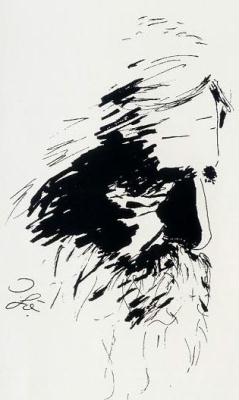 When Machines were mice and men were lions it was once upon a time. But now it is the opposite -it's twice upon a time.
 Eigentlich wollte ich statt über Rosa Grünlich lieber etwas über Gitarrenbands schreiben. (Jetzt fehlt wieder die Zeit.) Gute Gitarrenbands sind seit den späten 60er Jahren selten geworden. Von den alten gibt es eigentlich keine mehr, seit Ray Davies die Kinks aufgelöst hat (ich meine nicht die, die auf Heizdeckenverkaufsfahrten spielen oder im ZDF-Frühstücksgarten oder wie das heißt ... Wär auch mal ein schönes Thema: dicker alter Tremoloe in Lederhose im Vollplayback von Silence is golden ...).
 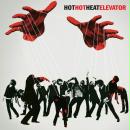 Seit einiger Zeit gibt es wieder welche: The Features, The Killers, Kaiser Chiefs - und: HotHotHeat! Gitarre, Bass, Schlagzeug und ein hübscher Sänger mit Roger-Daltrey-Korkenzieherlocken, Carnaby-Street-Jacke und einer Stimme wie Ray Davies: so sophisticated näselnd manchmal leicht angetrunken (Running Out Of Time). Das neue Album Elevator (
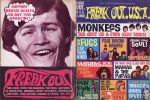 Oh Yea it's a Freak Out Baby way way back there in 66-67 The Hippie/Flower Power Culture jumped the rails a bit and was in full effect as Fashion and Faux lifestyle choice words like Groovy, Outta Sight and Freak Out started to appear on everything from Cameras to Potato Chips.
  Herzdenken an Soldaten in schwierigen Situationen; da könnte Prof. Trommsdorff helfen: „Die reine Information ist gar nicht mehr gewollt“, sagt Prof. Volker Trommsdorff von der Technischen Universität Berlin. „Die Menschen kaufen heute ein emotionales Gefühl“, beobachtet Stefan Kolle von der Hamburger Agentur KolleRebbe. Seine Firma hat bereits zweimal einen Goldenen Löwen in Cannes gewonnen. Traditionelle Muster werden auf Dauer keinen Erfolg haben, meint Kolle. „Diese Erkenntnis setzt sich zunehmend auch bei den Kunden durch.“ Ein wichtiger Trend ist nach Ansicht Kolles die Bildersprache. Immer mehr Anzeigen und Filme verzichteten ganz auf Texte. „Die Botschaft muss heute visuell gedacht werden, in einer Sekunde muss die Botschaft vermittelt werden.“ Trommsdorff, der auch Studien zur Werbewirkung erstellt hat, weiß, dass auf den Verbraucher heute immer mehr Werbung einprasselt. So verweilt ein Zeitschriftenleser heute maximal ein bis zwei Sekunden auf einer Anzeige. „In dieser Zeit muss etwas passieren“, sagt er. - So die
  Versuch einer altmodischen Fernsehkritik: gerade gesehen:


